


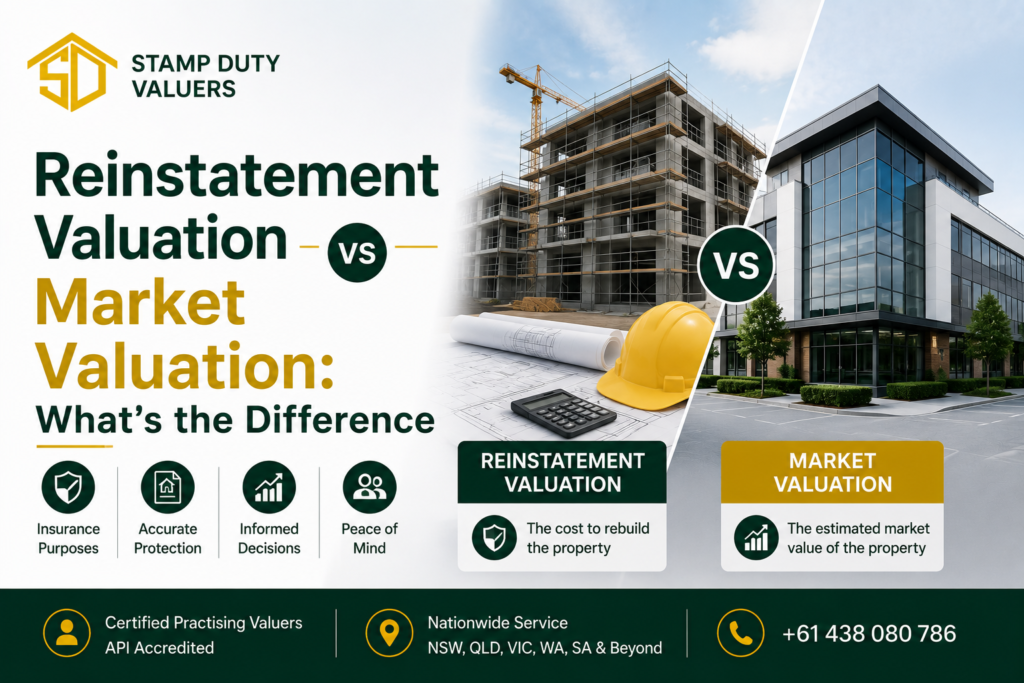
Reinstatement Valuation vs Market Valuation: What’s the Difference
Property owners frequently assume a single valuation figure applies across every situation they might encounter, whether that is insuring their home, transferring property to a family member, refinancing with a bank, or challenging a land tax assessment. In reality, two genuinely different concepts sit behind most of these situations: reinstatement valuation and market valuation. Confusing the two can lead to a property being significantly underinsured, a duty assessment being challenged, or a lender rejecting a figure that was never intended to serve that purpose.
This guide explains exactly what separates a reinstatement valuation for insurance purposes from a market valuation, why each serves an entirely different function, and which type of property owners across NSW may need when dealing with insurance, transfer duty, refinancing, land tax, or another specific circumstance.
SUMMARY
What This Article Covers
This guide explains the fundamental difference between reinstatement valuation and market valuation, covering what each figure actually measures and why they can differ so significantly for the same property. It covers the specific situations that call for each type of valuation, including insurance, stamp duty transfers, bank refinancing, and land tax objections, and explains why relying on the wrong figure for a given purpose can create genuine complications. It also answers the questions property owners raise most often about which type of valuation they actually need.
What Reinstatement Valuation Actually Measures
A reinstatement valuation calculates what it would genuinely cost to demolish and rebuild a property to its current standard, using todays construction rates and reflecting current building code requirements. This figure excludes the value of the land entirely, focusing purely on the structure itself, and it is the figure insurers rely on to set an appropriate sum insured on a building insurance policy.
Because reinstatement valuation is concerned solely with reconstruction, it accounts for factors such as construction type, size, finishes, demolition requirements, and professional fees associated with rebuilding, none of which have any direct bearing on what a buyer might pay for the property in an open market transaction.
What Market Valuation Actually Measures
A market valuation, by contrast, assesses what a willing buyer would pay a willing seller for the property as a whole, including both the land and any improvements, based on genuinely comparable sales evidence from the surrounding area.
Why Land Contribution Changes the Figure Entirely
Market valuation includes land value, local demand, and broader economic conditions that reinstatement valuation deliberately excludes, meaning the two figures for the same property can differ dramatically, particularly where land value makes up a substantial proportion of the property’s overall worth.
Why Market Value Is the Wrong Figure for Insurance Purposes
Because market value reflects the land as well as the building, using it to set an insurance sum insured can leave a property significantly underinsured, since the actual cost of rebuilding the structure may bear little resemblance to what the overall property might sell for.
Why These Two Figures Can Diverge So Significantly
Understanding why reinstatement and market valuations produce such different figures for the same property helps explain why each serves such a distinct purpose.
High Land Value, Modest Construction Cost
A property in a highly sought after location may carry a market value driven substantially by its land, while the dwelling itself might be relatively modest, meaning its reinstatement figure could be considerably lower than its overall market value.
Modest Land Value, Complex Construction
Conversely, a property with unusual architectural features, complex construction, or extensive size in an area with comparatively lower land values might carry a reinstatement figure that exceeds what the general market conditions in that location would otherwise suggest.
When You Need a Reinstatement Valuation
Reinstatement valuation applies specifically to situations concerned with rebuilding cost rather than the property’s overall worth.
Building and Commercial Insurance Purposes
An insurance valuation report prepared for residential or commercial property relies on accurate reinstatement figures to ensure the sum insured genuinely reflects current reconstruction costs. Obtaining a reinstatement valuation for insurance helps protect the property owner from a potentially significant financial shortfall if the building is damaged or destroyed and a claim needs to be made.
Strata Insurance Obligations
Strata property valuation for insurance purposes similarly relies on a reinstatement figure covering the entire building and common property, given the legislative obligation owners corporations face to insure the scheme adequately.
When You Need a Market Valuation
Market valuation applies to a considerably broader range of situations where the property’s overall worth, including land, genuinely matters.
Stamp Duty on Family and Related Party Transfers
Where property is transferred between family members, sometimes described as a love and affection transfer, or moves between related entities without an arm’s length sale price, Revenue NSW requires a market valuation to establish the dutiable value for stamp duty purposes.
Bank Refinancing and Lending Decisions
For purchases, refinancing and equity lending, APRA guidance on mortgage-security valuations explains that lenders may use full on-site valuations, desktop or kerbside assessments, automated valuation models or contract reviews, depending on the property, risk and lending context.
Land Tax Valuation Objections
Where a property owner believes their land tax valuation issued by the Valuer General does not reflect genuine circumstances, a market valuation focused specifically on land value provides the evidence needed to support a formal objection.
Tax and Legal Purposes
Capital gains tax events, family law property settlements, and deceased estate administration all rely on market valuation to establish an accurate figure for a specific date, since these purposes are concerned with the property’s overall worth rather than reconstruction cost alone.
Common Misunderstandings That Lead to the Wrong Valuation Being Used
Several recurring assumptions lead property owners to rely on the wrong type of valuation for their specific circumstances, often without realising the mismatch until it becomes a genuine problem.
Assuming a Recent Sale Price Covers Insurance Needs
Owners who recently purchased a property sometimes assume the contract price gives them an adequate reference point for insurance purposes, overlooking that this figure reflects land and market conditions rather than the specific cost of rebuilding the structure alone.
Assuming a Bank Valuation Suits Every Purpose
A valuation obtained through a bank for lending purposes is a market valuation prepared specifically for that lender’s security assessment, and using this same figure for a stamp duty transfer or an insurance review can mean relying on a figure that was never intended for that separate purpose.
Who Prepares These Valuations and What to Look For
Both reinstatement and market valuations should be prepared by a government registered valuer with genuine, relevant experience in the specific type of assessment required.
Independence and Professional Qualifications
Whether commissioning a reinstatement or market valuation, the valuer should hold recognised professional qualifications and have no financial interest in the outcome, particularly for stamp duty and related party transfers where independence carries additional importance.
When Expert Witness Evidence Is Required
Where a market valuation becomes contested, whether through a land tax objection, a family law dispute, or a matter involving an easement valuation expert witness, the report needs to meet a higher evidentiary standard capable of withstanding scrutiny from a revenue office, tribunal, or court.
Reinstatement Valuation Versus Market Valuation at a Glance
● Reinstatement valuation measures rebuilding cost; market valuation measures overall worth, including land
● Reinstatement valuation supports insurance cover, market valuation supports sale, tax and lending purposes
● Reinstatement valuation excludes land entirely; market valuation includes it
● Market valuation is required for stamp duty on family and related party transfers
● Bank valuers rely on market valuation to confirm loan security
● Land tax objections require a market valuation focused on site value specifically
Frequently Asked Questions
Q: What is the main difference between reinstatement and market valuation?
A: Reinstatement valuation measures what it would cost to rebuild a property, excluding land, while market valuation reflects the property’s overall worth including land value.
Q: Why can’t I use my market valuation for insurance purposes?
A: Market value includes land and broader demand factors unrelated to construction cost, which can leave a property significantly underinsured if used to set a sum insured.
Q: Do I need a market valuation for a family property transfer?
A: Yes. Revenue NSW requires an independent market valuation to establish the dutiable value whenever a transfer occurs without an arm’s length sale price, such as a family transfer.
Q: Does a bank use reinstatement or market valuation?
A: Banks rely on market valuation to confirm a property provides adequate security for a loan, since this reflects the property’s overall worth rather than rebuilding cost alone.
Q: Can a market valuation help with a land tax objection?
A: Yes. An independent market valuation focused on site value provides the evidence needed to support a formal objection to an assessed land tax figure.
Q: Do strata schemes need reinstatement valuation?
A: Yes. Owners corporations require a reinstatement valuation covering the entire building to meet their legislative obligation to insure the scheme adequately.
Q: Who should prepare these valuations?
A: A government registered valuer with genuine experience in the specific type of assessment required, whether reinstatement or market valuation, should prepare the report.
CONCLUSION
Reinstatement valuation and market valuation answer two genuinely different questions, and relying on the wrong figure for a given purpose can create real complications, whether that means being underinsured, facing a challenged stamp duty assessment, or presenting the wrong evidence to a lender or revenue office. Understanding which type of valuation a specific situation calls for is the first step toward getting a figure that will actually be accepted.
Engaging an experienced, independent valuer who understands both concepts ensures property owners across NSW obtain the right type of evidence, whatever the circumstance requires.
Need a Reinstatement or Market Valuation? Contact Stamp Duty Valuers
Stamp Duty Valuers prepares independent reinstatement and market valuations for property owners across NSW, covering insurance, stamp duty transfers, bank refinancing, and land tax objections. Our government registered valuers ensure every report is prepared for the specific purpose it needs to serve.
Visit stampdutyvaluers.com.au | NSW Wide