



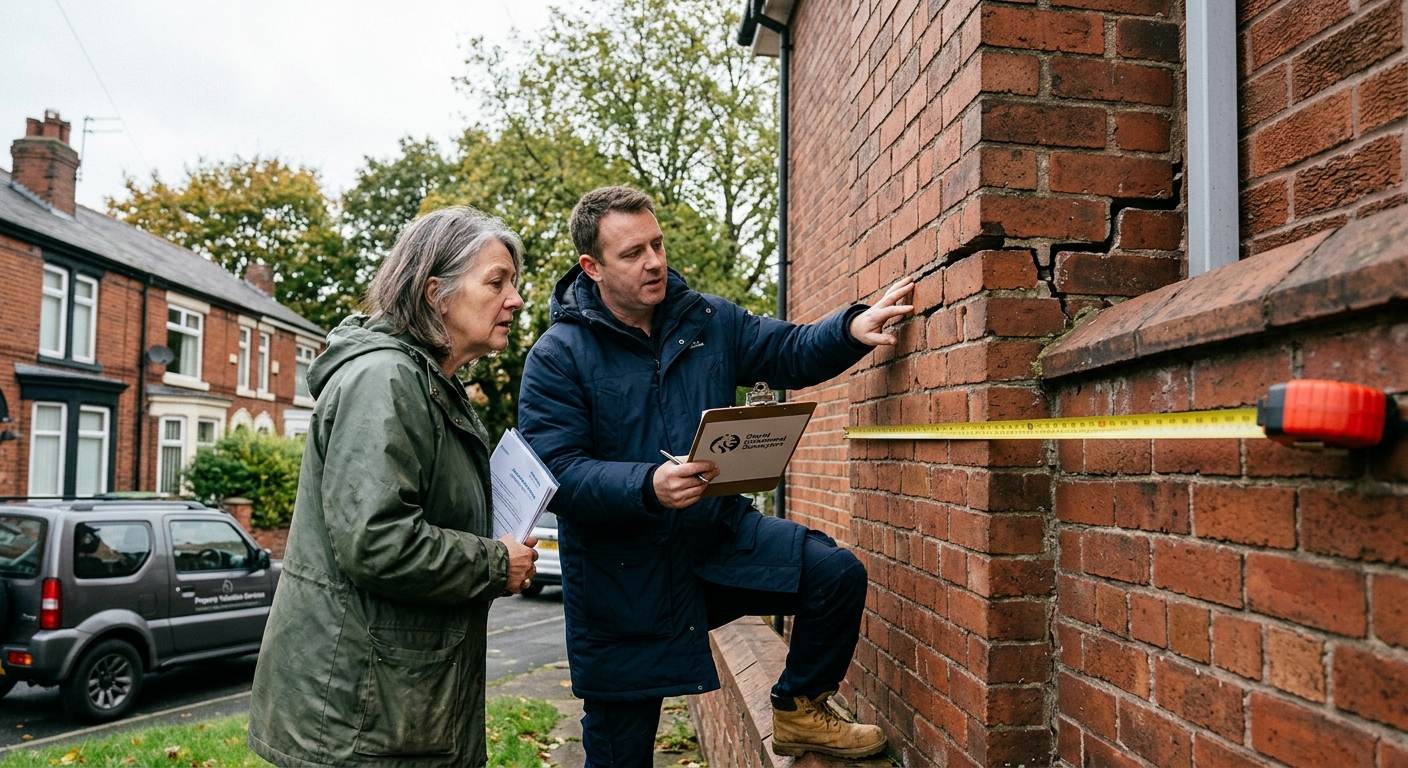
Are You Underinsured? How a Reinstatement Valuation Protects Your Property
If your home burned down tomorrow, would your insurance payout actually cover the cost to rebuild it? For a lot of Australian property owners, the honest answer is “probably not” — and most don’t find that out until they’re standing in front of a burnt-out shell trying to lodge a claim.
This isn’t about being careless. Most people set their sum insured based on what a bank valuation said years ago, what a real estate agent estimated, or a rough figure an insurance broker suggested over the phone. None of those figures are designed to tell you what it would actually cost to demolish and rebuild your home today, which is why an insurance rebuild cost assessment is used to estimate the true cost of restoring the property. That’s a completely different question, and it’s the one a reinstatement valuation is built to answer.
In this article, we’ll walk through what a reinstatement valuation actually is, why it’s different from the market value or bank valuation you might already have, why underinsurance happens more often than people realise, what’s involved in getting one done, and how often you should be updating it.
Summary
A reinstatement valuation calculates what it would cost to demolish and completely rebuild your property to its current standard — not what it would sell for. Market value and reinstatement value can be wildly different, especially on older homes on expensive land, or newer builds on cheaper blocks. Most Australian building insurance policies include an “average” or co-insurance clause, meaning that if you’re underinsured, your insurer can reduce a claim payout proportionally, even for a partial loss — not just a total loss. Underinsurance tends to creep up over time as construction costs rise and owners simply renew their policy each year without reviewing the sum insured. A proper reinstatement valuation, carried out by a qualified valuer or quantity surveyor, factors in demolition, debris removal, current building code compliance, professional fees and the time it will realistically take to rebuild. Getting one every two to three years — or after major renovations — is generally considered good practice, and it’s a relatively small cost compared to the risk of funding a rebuild shortfall yourself.
What Is a Reinstatement Valuation?
A reinstatement valuation (sometimes called an insurance valuation or replacement cost assessment) is an independent estimate of what it would cost to knock down what’s left of your property after a total loss — think fire, flood, or storm damage — and rebuild it from scratch to an equivalent standard, on the same site.
It’s the figure your insurer should be using to set your sum insured: the maximum amount your policy will pay out.
Importantly, a reinstatement valuation isn’t just “what did the house cost to build originally” adjusted for inflation. A proper assessment typically accounts for:
- Current construction costs for materials and labour in your specific location
- Demolition and removal of debris from the damaged structure
- Bringing the rebuild up to current building code and planning requirements (which may be stricter than when the original home was built)
- Professional fees — architects, engineers, council approvals
- Temporary fencing, site access and other establishment costs
- A realistic allowance for how construction costs might move during the rebuild period, since a full rebuild after a major loss can take well over a year from the date of the event to completion
None of this is guesswork you can do from a real estate listing. It’s a technical assessment, which is why insurers and valuers treat it as a distinct exercise from a standard property valuation.
Reinstatement Value vs Market Value: Why They’re Not the Same Thing
This is where a lot of confusion happens, and it’s worth being blunt about it: your property’s market value and reinstatement value are answering two completely different questions.
- Market value is what a willing buyer would pay for the property, including the land, in the current market.
- Reinstatement value is what it would cost to rebuild the improvements (the house, garage, fencing, pool, etc.) — it has nothing to do with the land underneath them.
Here’s where it gets counterintuitive. In a lot of Australian capital cities, land makes up a huge share of the market value, particularly in inner-ring suburbs of Sydney or Melbourne. A modest 1960s brick veneer home on a large block in an expensive suburb might have a market value well into the millions — but the actual cost to rebuild that same house could be a fraction of that, because most of the value sits in the dirt, not the structure.
Flip it around, and you get the opposite problem. A architecturally designed, high-spec home on a smaller or cheaper block — say, a coastal property in regional Queensland or a hinterland acreage — might have a comparatively modest market value, but a very high reinstatement cost, because of complex construction, custom finishes, difficult site access, or bushfire-attack-level (BAL) construction requirements that push up rebuild costs significantly.
If you (or your insurer) simply used the market value or the purchase price as a guide for your sum insured, you could end up dramatically over or under the mark in either direction — and underinsurance is the one that actually costs you money when something goes wrong.
Why Underinsurance Is More Common Than People Think
Most homeowners assume underinsurance only matters if the whole house burns down and they get a smaller cheque than they need to rebuild. That’s true, but it’s not the whole picture — and it’s arguably not even the more common way underinsurance bites.
The “average” or co-insurance clause
Most Australian building insurance policies — residential and commercial — include what’s known as an average clause (sometimes called a co-insurance clause). In plain English, it means that if your sum insured is below the true reinstatement value, the insurer can reduce your claim payout by roughly the same percentage you’re underinsured by — even for a partial claim.
For example: if your home is insured for 70% of its true reinstatement value and you have a kitchen fire that causes $100,000 in damage, the average clause could mean your insurer only pays out around $70,000, leaving you to cover the rest — even though the total loss was nowhere near the sum insured.
This catches people out constantly, because most owners assume “well, my sum insured is higher than any repair bill I’d realistically get, so I’m fine.” The average clause means that logic doesn’t hold if the sum insured itself is too low relative to the true rebuild cost.
How the gap builds up over time
Underinsurance rarely happens because someone deliberately underinsures. It creeps up because:
- The original sum insured was based on a rough estimate, a bank valuation (which is designed for lending purposes, not insurance), or the purchase price
- Owners “auto-renew” their policy year after year without reviewing the figure
- Building costs — materials, labour, compliance requirements — have risen faster than general inflation over recent years, particularly since 2020
- Renovations, extensions or a new granny flat were never added to the sum insured
- Older homes get rebuilt to modern building codes, which usually cost more per square metre than the original construction
None of these are dramatic, one-off events. They’re small, gradual gaps that only become obvious after a loss — which is exactly the wrong time to find out.
Who Actually Needs a Reinstatement Valuation?
While every insured property benefits from an accurate sum insured, a few groups tend to be at higher risk of getting it wrong:
- Owners of older or architecturally unusual homes, where insurer online calculators (which typically ask for basic details like bedroom count and floor area) can’t account for period features, custom joinery, or non-standard materials
- Strata schemes and owners corporations often have specific legal obligations relating to building insurance, including strata insurance requirements that vary between states and territories and can face disputes between owners if the figure is wrong
- Landlords and property investors, particularly those with several properties, where a small percentage gap multiplied across a portfolio adds up quickly
- Owners in bushfire, flood or cyclone-prone areas, where rebuilding to current compliance standards (like BAL ratings in bushfire zones, or elevated flood levels in parts of Queensland) can be significantly more expensive than the original build
- Anyone who has renovated, extended, or added a granny flat, pool or shed without notifying their insurer or updating the sum insured
If you fall into any of these categories, or simply haven’t reviewed your sum insured in several years, it’s worth getting a professional opinion rather than relying on an online estimate.
Who Can Carry Out a Reinstatement Valuation?
In Australia, reinstatement valuations are generally prepared by a Certified Practising Valuer accredited with the Australian Property Institute, or a quantity surveyor accredited with the Australian Institute of Quantity Surveyors. For more unusual or complex properties — heritage buildings, large acreage, commercial or industrial sites — it’s worth using a valuer with specific experience in that property type, since the cost drivers can be quite different from a standard suburban home.
An independent valuation carries more weight than an online calculator or a rough estimate from a broker, because it’s backed by a formal, defensible report — which matters both for setting the right sum insured up front, and for supporting your position if there’s ever a dispute over a claim.
How Often Should You Update Your Reinstatement Valuation?
There’s no single legislated answer that applies to every property type or every state, but the general industry guidance is:
- Every 2–3 years for a full independent reinstatement valuation on a typical residential or commercial property
- Annually, using an indexed adjustment (based on published building cost indices) between full valuations, so your sum insured at least tracks general cost movements
- Immediately after any significant renovation, extension, or change of use
- When your insurer flags it, which sometimes happens at renewal if the sum insured looks out of step with the property’s characteristics
Strata schemes in particular should check their state’s specific strata legislation, as some jurisdictions set out minimum requirements or recommended review periods for building insurance valuations — these vary between states and territories, so it’s worth confirming the current rule for your state rather than assuming it’s the same everywhere.
Common Misconceptions Worth Clearing Up
“My insurer will just tell me the right figure.”
Most insurers offer an online sum-insured calculator at application or renewal time. These are a useful starting point, but they’re based on general assumptions about typical construction — they don’t know about your specific site conditions, custom features, or recent renovations.
“I’ll only lose out if the whole house is destroyed.”
As covered above, the average clause in most policies means underinsurance can reduce a payout on a partial loss too, not just a total loss.
“A higher market value means I need higher insurance.”
Not necessarily — and sometimes it’s the opposite, particularly where land value makes up most of the property’s price.
“I got a valuation when I bought the place, so I’m covered.”
A valuation for lending or purchase purposes (market value) is a different assessment to a reinstatement valuation, and it isn’t designed to set your sum insured.
Frequently Asked Questions
Does a reinstatement valuation include the value of the land?
No. Reinstatement value only covers the cost to rebuild the improvements — the house, garage, fencing, pool and similar structures. Land isn’t destroyed in a fire or storm, so it’s excluded from the calculation.
How much does a reinstatement valuation cost?
Costs vary depending on the property’s size, complexity and location, and whether it’s a standard residential home or something like a strata building or commercial property. It’s generally a modest cost compared with the potential financial gap from being underinsured.
Can I just use my bank valuation for insurance purposes?
It’s not recommended. A bank or mortgage valuation is prepared to assess lending security and reflects market value, not rebuild cost — the two figures can be very different.
What happens if I don’t update my sum insured after a renovation?
Your policy may not reflect the true rebuild cost of the property, which increases the risk of being underinsured and having a claim reduced under an average clause.
Do strata schemes need a reinstatement valuation?
Owners corporations generally have an obligation under state strata legislation to insure the building for its full replacement value, and many states recommend or require periodic professional valuations to support that figure — the specifics vary by state, so it’s worth checking your state’s requirements.
Is a reinstatement valuation the same as an insurance valuation?
Yes, these terms are generally used interchangeably in the Australian property and insurance industry, along with “replacement cost assessment.”
Conclusion
Underinsurance is rarely deliberate — it builds up quietly as construction costs rise and sums insured go unreviewed. Because most policies include an average clause, even a partial claim can be reduced if your cover falls short. A reinstatement valuation gives you an independent, defensible figure to insure against, rather than a guess based on market value or an old estimate.
Need an Independent Reinstatement Valuation?
If it’s been a few years since you reviewed your sum insured, or you’ve renovated and aren’t sure your policy reflects it, an independent reinstatement valuation can give you a clear, defensible figure to work from. Stamp Duty Valuers can help Australian property owners get an accurate, professionally prepared reinstatement valuation report suited to their property. You can reach the team on +61 438 080 786 to discuss what’s involved for your situation.