


How Rising Australian Building Costs Impact Your Reinstatement Valuation
You bought the house, took out insurance, and set the sum insured at a figure that felt about right. Fast forward a few years. If the place burned down tomorrow, would that number still cover a rebuild?
For plenty of owners, it wouldn’t. Building costs don’t stand still, which is why a current property reconstruction cost assessment can help owners understand whether their insurance figure still reflects realistic rebuilding costs. This article explains what a reinstatement valuation measures, why rising costs quietly erode it, and how it differs from the market value and the value used for stamp duty.
Summary
A reinstatement valuation estimates what it would cost to rebuild a building to its current standard after it’s destroyed. It excludes the land and has nothing to do with what the property would sell for.
Because construction costs rise, a figure set a few years ago can fall short today, leaving some owners underinsured without realising it. Labour, materials, compliance requirements and demand after major events all push rebuild costs up, often faster than property prices.
The practical takeaways:
- Treat your sum insured as something to review, not set and forget.
- Update the valuation after renovations, purchases, transfers and any big jump in building costs.
- Don’t mix up reinstatement cost, market value and dutiable value. They answer three different questions.
- Check your policy wording to see how it handles a rebuild that costs more than your sum insured.
What a Reinstatement Valuation Actually Measures
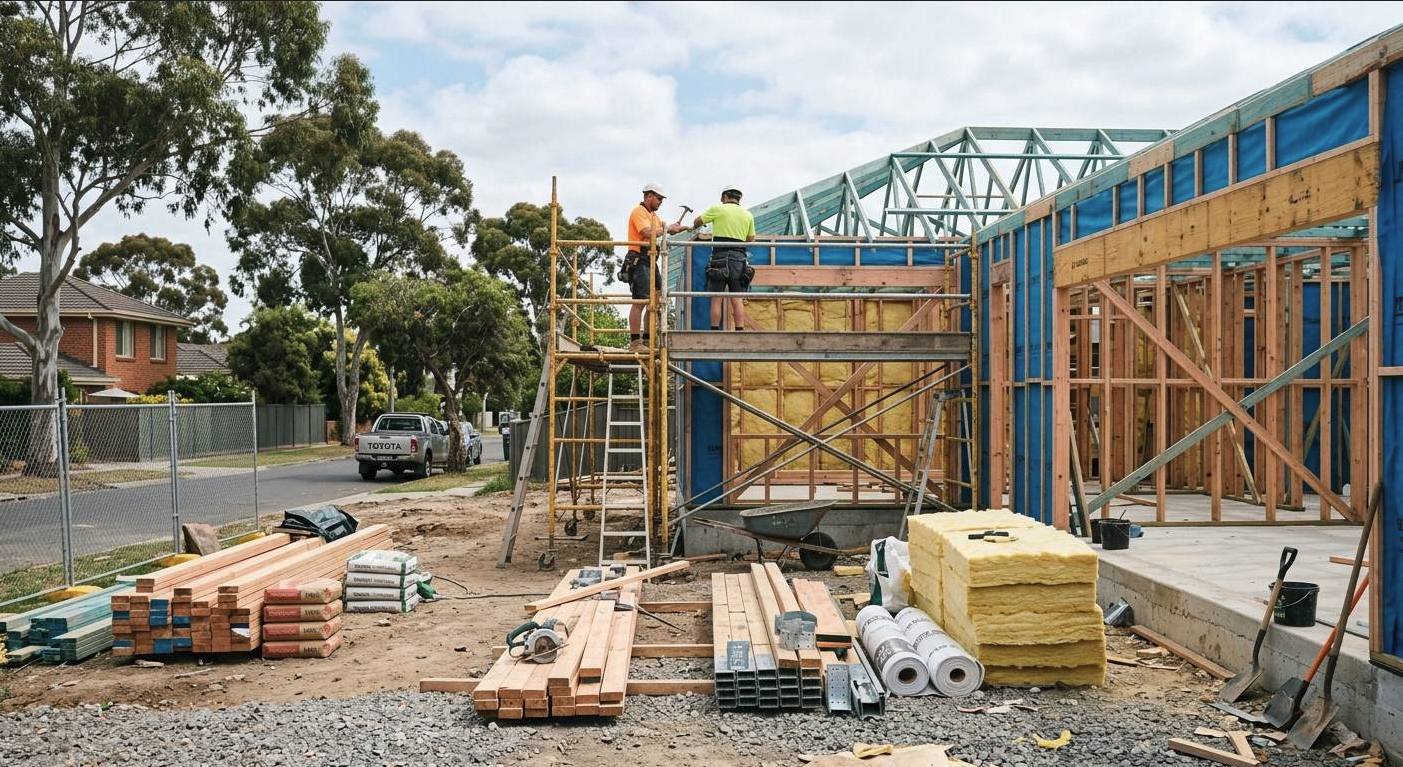
A reinstatement valuation (also called a replacement cost valuation) estimates the cost of rebuilding a damaged or destroyed building to a similar size, standard and function. It’s what your insurer wants to know when setting a sum insured.
What’s usually included
- The cost of the building work itself, including fixed improvements like built-in kitchens and bathrooms
- Demolition and removal of debris
- Architect, engineer and other professional fees
- Council and certification costs
- Meeting current building regulations, including bushfire requirements in some areas NSW Rural Fire Service guidance, where those requirements apply.
- An allowance for cost increases while the rebuild is planned and carried out
What’s not included
- The value of the land
- Location or lifestyle premiums (a Mosman address costs the same to rebuild as the same house in Mudgee, give or take trade costs)
- Market conditions such as buyer demand
That last point catches people out. A home can sell for a fortune because of its suburb and still be cheap to rebuild, or the other way round.
Why Building Costs Rise Faster Than Your Sum Insured
Your sum insured is a number written at one point in time. Rebuild costs keep moving.
The data isn’t uniform, which is worth knowing. Cotality’s Cordell Construction Cost Index recorded a 1.0% national rise in the June 2026 quarter, and a 2.8% rise over the 12 months to June. That’s a modest annual figure. But annual growth in home building costs has been well below the pre-COVID decade average of 4.7%, which tells you how fast costs were rising in the years before. Other forecasters see more pressure ahead: Rider Levett Bucknall forecasts national construction cost rises of 4 to 6 per cent in 2026.
Different indexes measure different things (home building, tender prices, commercial work), so don’t treat any single figure as your own rebuild cost. What matters is the direction. Even a few per cent a year compounds.
Here’s a simple, hypothetical illustration. If a home was insured for $800,000 and rebuild costs have risen 5% since, the true figure is closer to $840,000. That’s a $40,000 gap, and the owner would cover it. Two or three years of that and the shortfall gets uncomfortable.
What pushes rebuild costs up
- Labour: trades are in demand, and wage rises flow through to building prices
- Materials: timber, steel, cement sheeting and imported products can swing sharply, sometimes because of events overseas
- Regulation: a rebuilt home generally has to meet today’s standards, including energy and bushfire requirements in some areas
- Demand surge: after a major storm, flood or bushfire, everyone rebuilds at once and prices lift
- Site access: tight sites in Sydney’s inner west or steep blocks on the Central Coast cost more to work on
Where the Gap Tends to Be Biggest
Older and character homes
A Federation home in Haberfield or a 1960s brick veneer with original features can’t be rebuilt cheaply with modern basics. Replicating plasterwork, timber joinery or heritage requirements adds cost that a generic per-square-metre estimate misses.
Renovated properties
Owners often renovate and forget to tell the insurer. A new kitchen, second storey or granny flat adds to the rebuild cost, but the sum insured stays at the old figure.
Regional and disaster-prone areas
Rebuilding in a regional town can mean paying to bring trades in. After a major event, availability tightens and prices follow.
Strata buildings
Owners corporations insure the building, so a low valuation affects every lot owner. Rules differ by state. In NSW, for example, owners corporations must obtain a replacement cost valuation at least every five years. Check the requirements for your own state or territory.
Reinstatement Cost vs Market Value vs Stamp Duty Value
These three get mixed up all the time, particularly during a purchase or family transfer.
| What it measures | Includes land? | Typical use | |
| Reinstatement valuation | Cost to rebuild the building | No | Setting the insurance sum insured |
| Market value | Likely sale price on the open market | Yes | Sales, lending, tax, estates |
| Dutiable value | Value on which stamp duty is calculated | Yes | Transfer duty on purchases and transfers |
Dutiable value rules vary between states and territories. In general, duty is based on the higher of the price paid and the market value, with special rules for gifts and related-party transfers. It isn’t based on rebuild cost.
A practical example: two siblings transfer a family home. The valuation for duty looks at what the property is worth. The insurance valuation looks at what it would cost to rebuild the house. You’ll probably need to think about both, but they’re separate questions with separate numbers.
When to Update Your Reinstatement Valuation
- After buying a property. Don’t assume the previous owner’s sum insured is right.
- After renovations or extensions. Tell your insurer and update the figure.
- After a family or related-party transfer. New ownership is a good time to review cover.
- When building costs jump. If the news is full of construction price rises, it’s worth a check.
- Every few years as a rule. Many professionals suggest a fresh valuation every three to five years, with an annual indexation check in between.
- For strata buildings, at the intervals your state requires.
Practical Steps to Keep Your Cover on Track
- Read your policy’s product disclosure statement. Some policies cover the full cost of rebuilding; others cap payouts at the sum insured. That difference matters a lot if costs have climbed.
- Don’t rely on an online calculator alone for unusual, older or large homes.
- Keep records of renovations, including dates and costs.
- Ask whether your sum insured includes demolition, fees and compliance costs.
- If you own an investment property or a home in a strata scheme, check who’s responsible for insuring what.
FAQs
How often should I update my reinstatement valuation?
A common approach is a full valuation every three to five years, and a quick review each year. Update sooner after renovations or when costs jump.
Is a reinstatement valuation the same as a market valuation?
No. A market valuation estimates what the property would sell for, including land. A reinstatement valuation estimates only what it would cost to rebuild the building.
Does a reinstatement valuation affect my stamp duty?
Not directly. Stamp duty is calculated on dutiable value, which relates to price or market value depending on the transaction and your state or territory.
What happens if I’m underinsured?
It depends on your policy. Some pay out only up to the sum insured, leaving you to cover the shortfall. Others have different arrangements. Check your policy wording.
Does the reinstatement cost include the land?
No. Land isn’t destroyed in a fire or storm, so it’s left out.
Why did my reinstatement cost go up when house prices fell?
They measure different things. House prices reflect buyer demand; reinstatement costs reflect labour, materials and regulation.
Conclusion
Building costs don’t rise evenly, and your reinstatement valuation only reflects the day it was prepared. Over a few years, a sum insured can drift well below what a rebuild would really cost. Review your cover each year, update the valuation after renovations or every few years, and don’t confuse it with market value or the value used for stamp duty.
Need Help With Your Reinstatement Valuation?
If you’re buying, transferring or renovating a property and want an independent view of your rebuild cost, Stamp Duty Valuers can talk you through what’s involved and what you’ll need. Call Stamp Duty Valuers on +61 438 080 786 for a no-pressure conversation.